stories
a tale or two from the road and home
.






DAYS 183 - 204: MANCORA, PERU
I’ve wanted to learn to surf for like…ever…
When I graduated college my dad gave me a wad of cash and a hand-written note that said move to California, buy a board and pursue your dreams…or something along those lines.
And while I managed the move to California part, I never quite got the surfing bit down. It was so much more terrifying than it looked. If you made it past the onslaught of whitewater - there were the forty or fifty jacked up dudes getting all moody and territorial over waves - and then there was the nosediving, the crashing, the not knowing which way was up or down, the jagged rocks, the feeling like you were drowning, the bonked head, the scraped feet, the sinus cavity full of salt water, the hallelujah-I-made-it back-to-the-surface-gasp for air. Only to get crushed again by the second wave of the set rolling in. Enough to make you drag yourself to land sniffing and snorting - and totally un-psyched to go back.
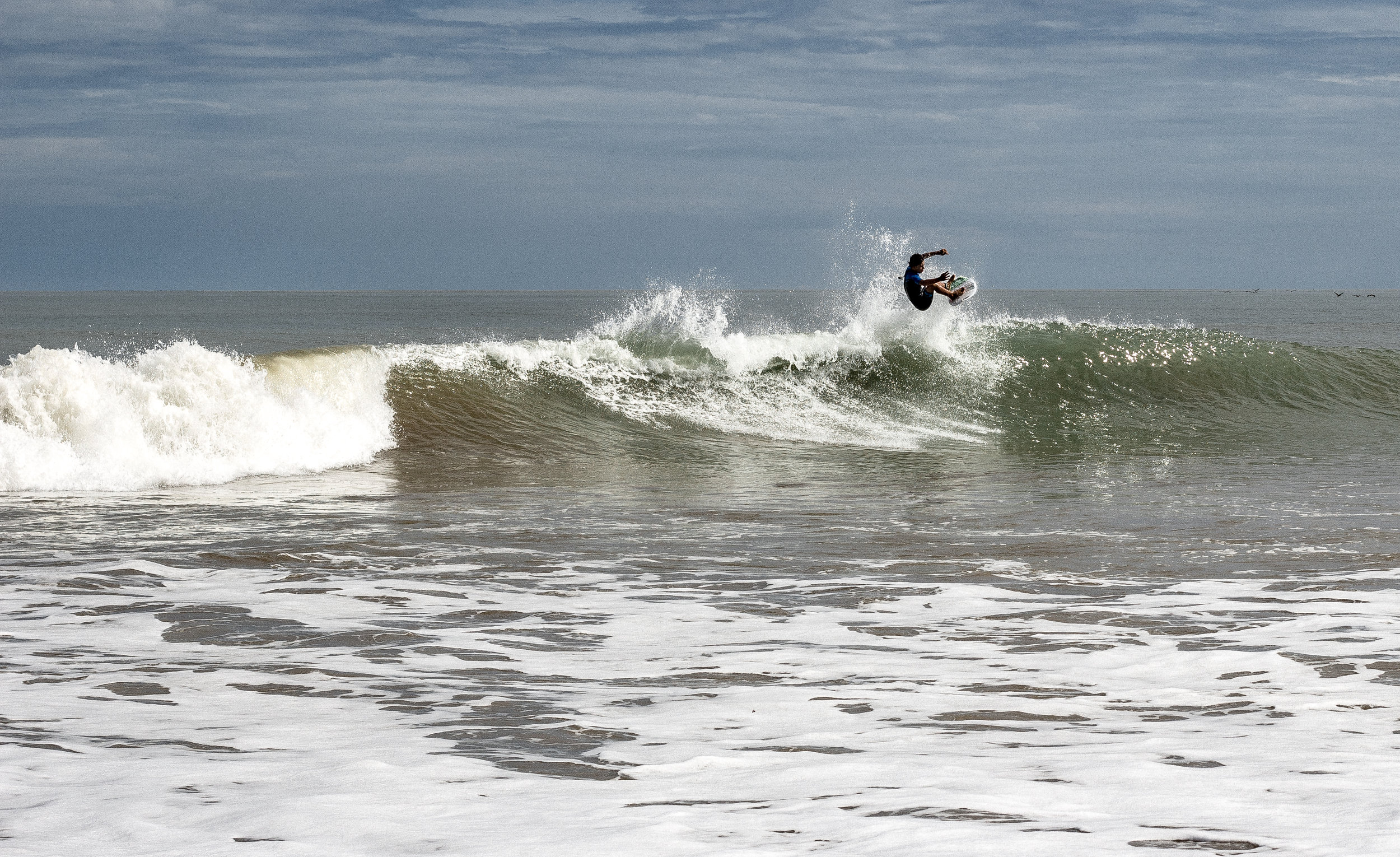
M A N C O R A , P E R U - (OBVIOUSLY NOT EITHER ONE OF US)
I’ve wanted to learn to surf for like…ever…
When I graduated college my dad gave me a wad of cash and a hand-written note that said move to California, buy a board and pursue your dreams…or something along those lines.
And while I managed the move to California part, I never quite got the surfing bit down. It was so much more terrifying than it looked. If you made it past the onslaught of whitewater - there were the forty or fifty jacked up dudes getting all moody and territorial over waves - and then there was the nosediving, the crashing, the not knowing which way was up or down, the jagged rocks, the feeling like you were drowning, the bonked head, the scraped feet, the sinus cavity full of salt water, the hallelujah-I-made-it back-to-the-surface-gasp for air. Only to get crushed again by the second wave of the set rolling in. Enough to make you drag yourself to land sniffing and snorting - and totally un-psyched to go back.
In the three years I lived in California - I probably went three times.
So the dream sat stagnant. Placed in that “someday I’ll…” category. The one we all have for the things that we’d like to do, but never seem to have the time or energy or persistence to actually pull off. But then along came Brad. Who coincidentally enough - also thought it’d be a cool thing to learn. And so from day one of honeymoon planning - we knew we wanted to spend some time by the ocean.
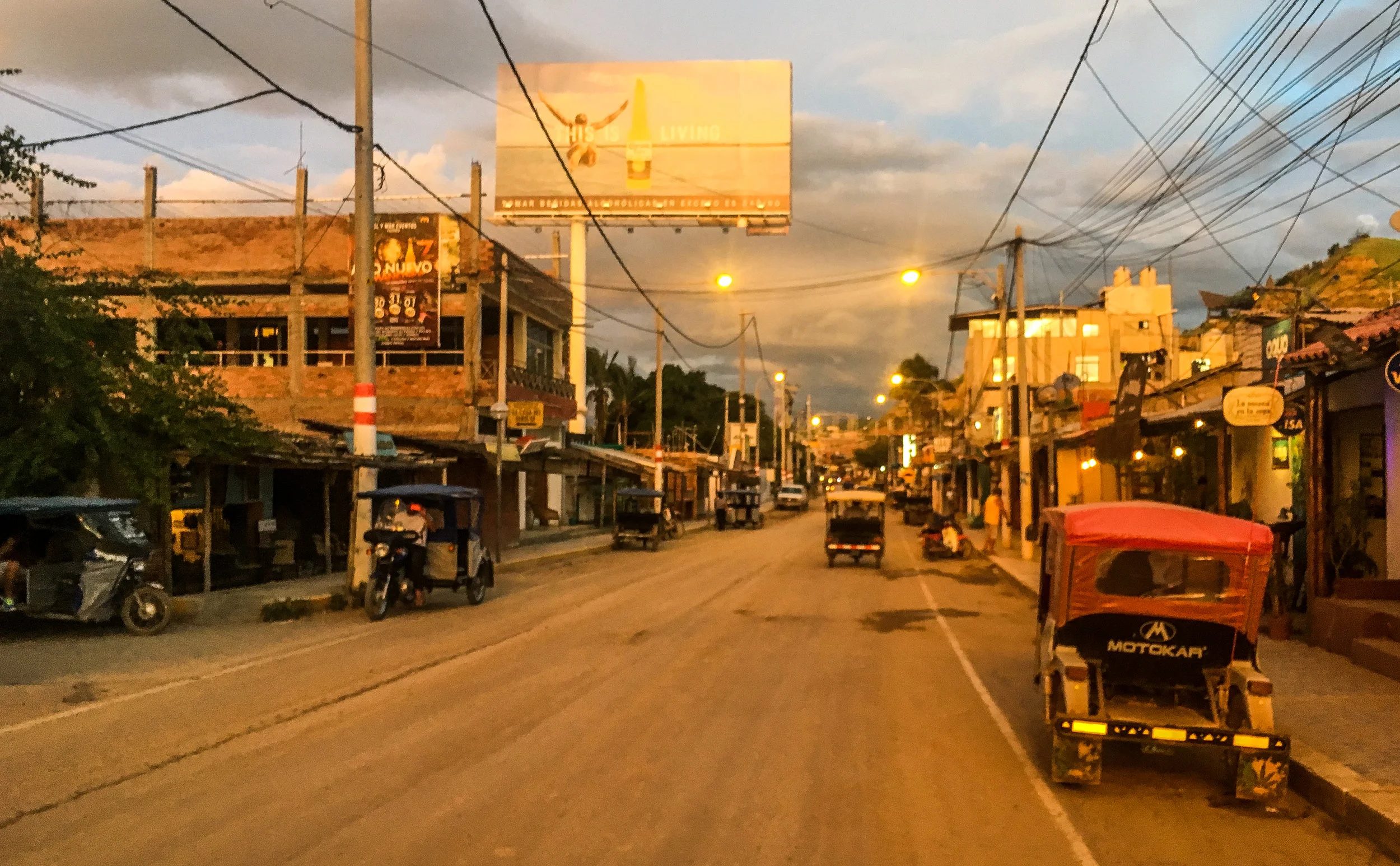
Based on recommendations from friends, we picked the tiny Peruvian town of Mancora - a scrappy little beach spot from which Earnest Hemingway was supposedly inspired to write “The Old Man and the Sea.” Also home to “an excellent left-hander - with a two defined section” - whatever that meant.
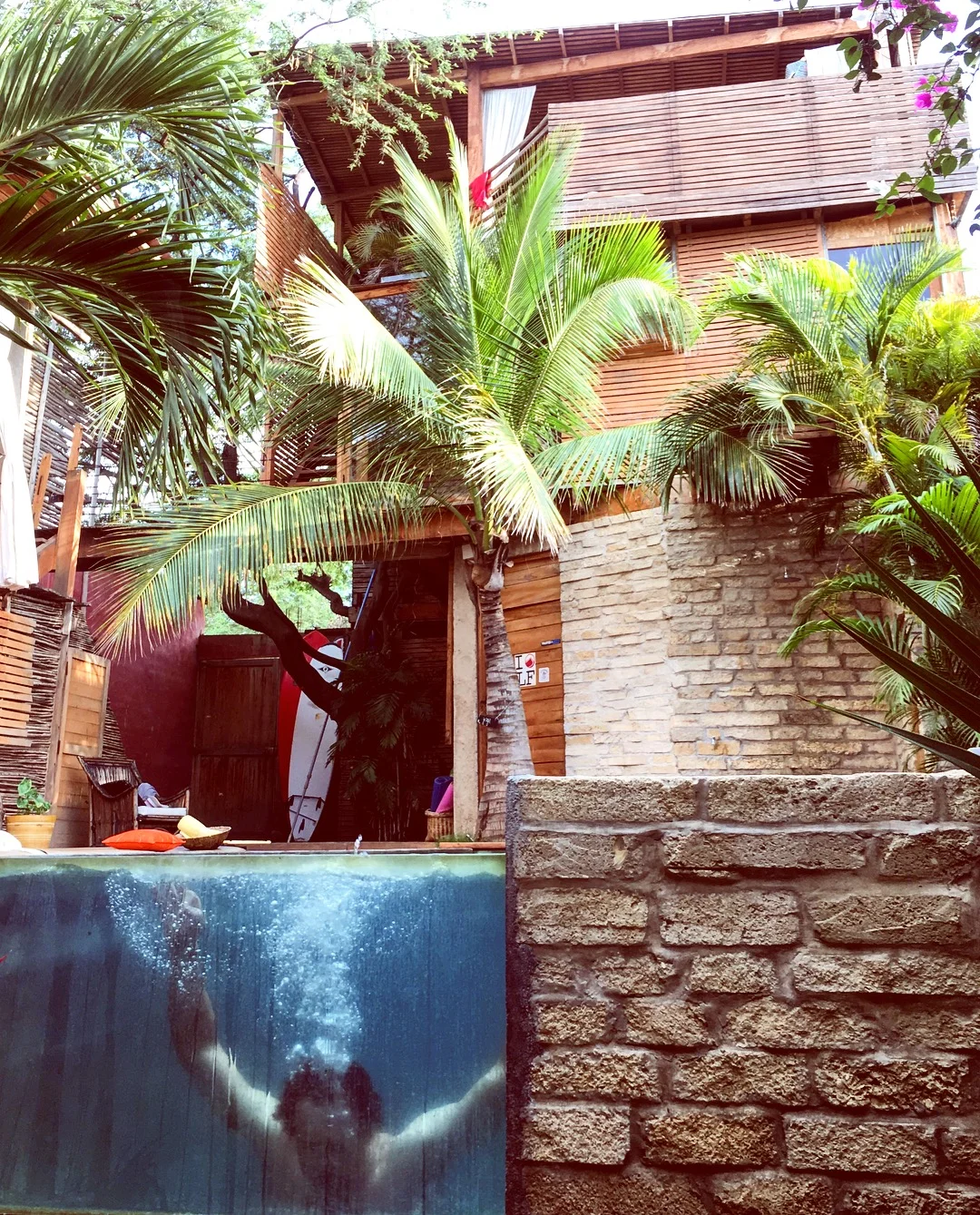
We arrived during slow season and were able to talk this awesome little eco resort into renting us this killllllller apartment 5 minutes from the beach - seriously everything my sleep deprived, amenity-starved little heart had been fantasizing about and more - and settled ourselves in for the longest stint stay of our 365 days.
And the surfing? Oh it started out well enough. The first couple of days we took lessons with a pair of instructors. The kind of guys with dark disheveled hair who smiled a lot and never wore shoes - and who were constantly, very loudly, reminding me to get my hands “behind your boobies!!” And those first couple of days were totally awesome. Because instructors are kind of like the giant orange floaties of the surf world. A safety net of sorts. They watch out for you. Get you into position. Give you a push when you need it. And as a result, you catch a few waves and have a blast. And you start to build up this false confidence that maybe…just maybe…you can actually surf.
But then you have to turn in your safety net and get out there on your own. And it’s like getting fed to the wolves. The ocean, hellbent on reminding you what a newb you really are.
I’ve never tried to pick up a sport that is so unfriendly to beginners. Maybe it’s because most of the people in the water learned to swim before they could walk and have been popping up on boards since they were in diapers. Maybe they’ve forgotten how difficult it is to learn. Oooor maybe it’s just that they’re all a bunch of pricks. Either way - surfers aren’t all as zen-ed out and “peace-bro” as they claim to be. As a group - in whole - they’re nasty. Forget trying to smile and wave hello as they fly past you on their way to the lineup. One glance into their dagger eyes quickly reminds you that this is their stomping grounds. Their wave. And you better stay the hell out of their way.
So, being my wussy little unconfrontational self - I’d stick way far to the outside. Hoping to catch the scrap waves that once in a blue moon would head my way - not yet claimed by one of the locals. But even on the off chance that happened, there was all the other stuff you had to master…
In order to actually catch a wave, you pretty much need to be in exactly the right spot. At exactly the right time. With exactly the right speed. You need to be able to look out over the expanse of blue stretched out in front of you and read the energy pulsing itself towards the shore. To anticipate where it’s going to curl over. Paddle like hell to get there. Wedge yourself right into that nook. Paddle like hell some more. And then, you know…jump to your feet without the nose of your board shoving itself into the water in front of you, sucking the board under - the nose on your face following closely behind - your inner voice cursing and praying and hoping to god that your leash doesn’t snap the board back towards you at the very second you emerge to the surface.
I mean really, the whole experience is a total mind fuck. But we stuck to our guns. And for almost three weeks we dragged our sunburnt, battered bodies into the water twice a day. And a lot of days it was that…dragging. I constantly had to remind myself that I wanted this. That it was…“fun.”
When we weren’t surfing, we were mopping up the water draining out of our nostrils. Stretching our broken biceps. Comparing our bruised hips and cut up feet. In the morning we’d pour a cup of coffee and psych ourselves up to give give it another go. And again and again I would find myself zipping up my wetsuit, trudging into the water, trying to ignore the nasty glances from locals, paddling until my arms felt like they were going to fall off, missing most waves, getting frustrated - paddling some more.
And then - just as our time in Mancora was winding down - something wonderful happened. We started catching waves. Not a lot mind you. But enough to appreciate that feeling that makes it all worth it. That drop in your stomach as you descend down the face - that rush as you feel that energy behind you pushing you forward - that heart pumping, body tingling surge of 25 second joy that leaves you totally high - and makes you completely forget about the 32 missed waves and 7 nose plants you took prior.
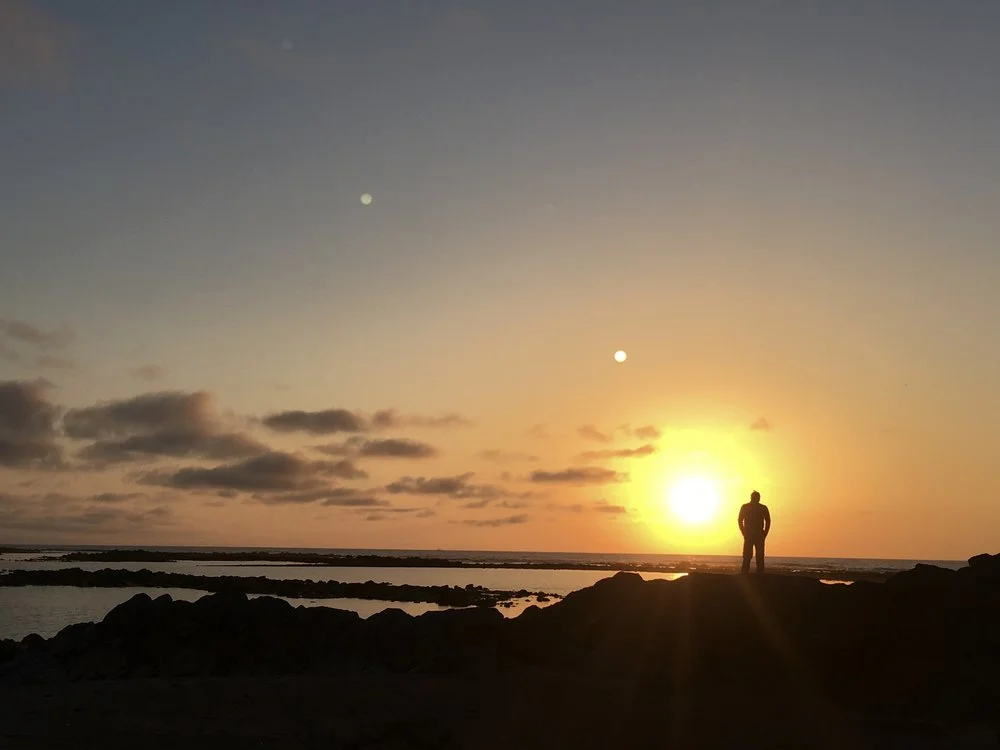
I’m still a weenie surfer. I still take care to sit way far outside the lineup. I still expend most of my energy paddling to the wrong spot. I still occasionally find myself getting sucked under the roaring whitewater. But over those three weeks I started to feel just a little bit more confident that maybe I belong out there too - that it’s something I can go out and enjoy with the rest of em. And if nothing else I’ve mastered the art of peacefully bobbing on my board in the water. Enjoying the warm sunshine on my face. Watching the sun turn a late afternoon orange and the waves roll in.
Words can’t express how unimaginably thankful I am for this year. Among so many other things, it has given us time and space. To learn things we’ve always wanted to learn. To do things we’ve always wanted to do. The things that would have otherwise remained on the “someday I’ll..’ list. I hope surfing will always be a part of our lives. That we’ll continue to improve. To get better. To have fun. And I hope that even when this year is over, we’ll still carve out time to learn new things, pursue our dreams and make sure that “someday” list never gets too long.
Until next time,
Kenz

DAYS 176 - 182: CUSCO, MACHU PICCHU & THE RAINBOW MOUNTAIN - (PERU PART 1)
Fresh off a few particularly horrific travel days that involved multiple ten hour bus rides, gastro intestinal distress (I’ll spare you the details on that one), sprinting between border crossings at 13,000 feet to collect forgotten passport stamps and nearly getting left in the middle of nowhere - we were pretty stoked to check out Peru - and stay in one place for a bit. N’let me tell ya, Cusco, certainly didn’t disappoint.

R A I N B O W M O U N T A I N , P E R U
Fresh off a few particularly horrific travel days that involved multiple ten hour bus rides, gastro intestinal distress (I’ll spare you the details on that one), sprinting between border crossings at 13,000 feet to collect forgotten passport stamps and nearly getting left in the middle of nowhere - we were pretty stoked to check out Peru - and stay in one place for a bit. N’let me tell ya, Cusco, certainly didn’t disappoint.
I mean what’s not to love about a city whose flag dons rainbow and whose name literally translates into “the bellybutton of the world?”
Built in the 13th century, Cusco served as the geographic center and capital of the Incan Empire. And it’s still got all that old world feel. With a little Spanish colonial vibe mixed in and a dash of hippy flare. Artsy little coffee joints and yoga studios line the cobblestone streets and Starbucks and McDonalds disguise themselves well enough behind the ancient cathedrals as to not ruin the beautiful time-worn energy that engulfs the place.
Cusco also serves as the gateway to Machu Picchu and The Sacred Valley - and although it had not been on our initial ’to do’ list - we soon learned we would be committing an offense comparable to backpacker treason if we did not visit. So we signed ourselves up for a two day tour and braced for the tourist assault that lay ahead.
Getting there was the worst of it. We were cheap and decided to bus it instead of take the train. And my god did we regret not spending the extra hundred bucks. The road was anything but straight. One 180 degree turn after the next, over and over and over and over. Enough to make you want to hang your green little head out the window, despite the risk of decapitation via sharp edge and unexpected pothole.
We then hiked it - another couple of hours to this surprisingly large, restaurant-and-hostel dense town in the otherwise wild Andes called Aguas Calientes. Slept a few hours in a muggy hostel, dragged ourselves out of bed at 4am in the pouring rain and joined the ten thousand other soggy, groggy, sleep deprived people to make the hike up to Machu Picchu.
And despite our general crankiness about the lines, the crowds, those obnoxious idiots who think it’s a dandy idea to stop right in the middle of the trail to take selfies - we made it to the gateway and entered a world that sucked you into it’s mystery and mind-bogglingness and all out, absolute awe.
I mean you’ve seen the pictures of course. But to be there - at the top of a cloud covered mountain - deep in the dense jungle - looking over this ancient city. With it’s perfectly trimmed farming terraces cascading down the side of the cliffs and the pristinely built houses made of massive granite boulders and the little “parks” and the stone fences and the sacrificial altars. It’s all just too much to comprehend. And it makes you realize how smart and strong this architecturally genius Incan society must have been.
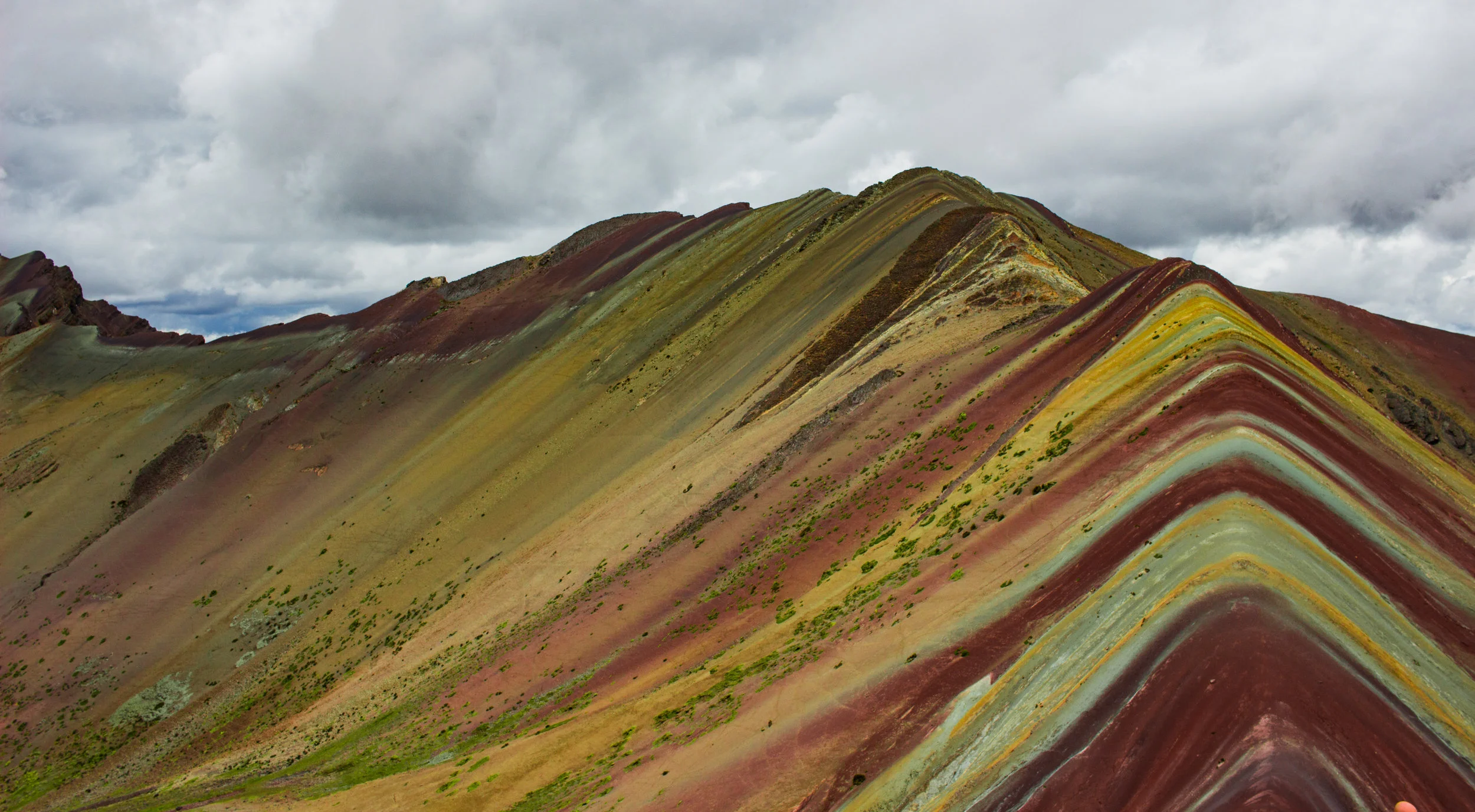
So in short it was worth it. And it didn’t scare us away from signing up for another Sacred Valley tourist attraction - The Rainbow Mountains, which were like - pretty much - my favorite thing.
Again getting there totally sucked. A long bus ride. A lot of annoying people. A huffing-and-puffing-and-occasionally-stopping-for-fear-of-heart-failure hike. Up to 17,000 feet (nearly the altitude of our Everest Basecamp debacle). Most of the people that visit opt to to ride horses to the top, but of course we decided we’d rather suffer and hoofed it on our own accord. But holy cow, good golly. When we finally made it - it. was. spectacular. This giant mountain range that looked like somebody melted a bunch of crayons (that kindergarten coveted Crayola 100 pack) right over it’s peaks. Brad - being Brad, thought the view of the 24,000 foot giant in the distance was more impressive. But I was in art meets mountain heaven.
So thus far Peru’s been pretty flipping fantastic. Good people, great food (although I’m opting to steer clear of the infamous “locally sourced” guinea pig) and take-your-breath-away beauty. Next we’ll be heading north to spend a few weeks to a tiny little surf town called Mancora. And I cannot wait to plant my toes in the sand and not have to worry about packing my suitcase for a whole twenty-one glorious days.
Until next time.
-Kenz


DAYS 161 - 175: RANCHO MONTANA, SANTA CRUZ - (BOLIVIA PART THREE)
I never - not in a million years - thought I would be able to say I spent part of my honeymoon in a pigpen in Bolivia.
But alas, how life can surprise you…
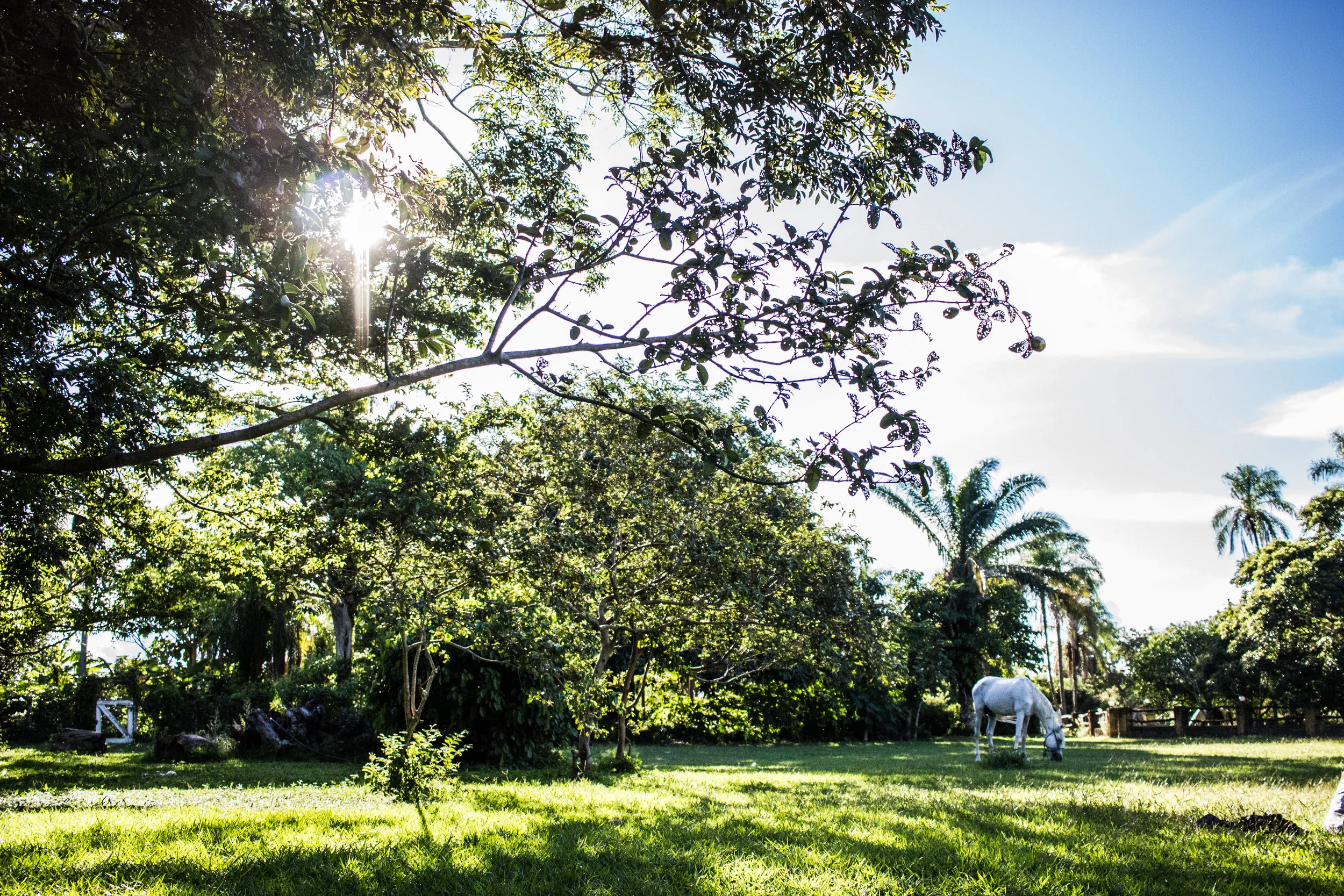
R A N C H O M O N T A N A - S A N T A C R U Z , B O L I V I A
I never - not in a million years - thought I would be able to say I spent part of my honeymoon in a pigpen in Bolivia.
But alas, how life can surprise you…
Brad and I knew that at some point on this trip we wanted to try WOOFing. What in the heck is that you might ask? A strange word really. Sounds a little like a sneeze. But in actuality, WOOF is a really cool organization. Short for Worldwide Organic Farming, it’s purpose is to link farms around the world with a supply of able bodied volunteers, who in exchange for gettin’ their hands a little dirty are provided with room and board. Very popular amongst young hippy types with few material possessions and selective hygiene habits. And not a bad way to see the world when you’ve got empty pockets and a tendency to wander.
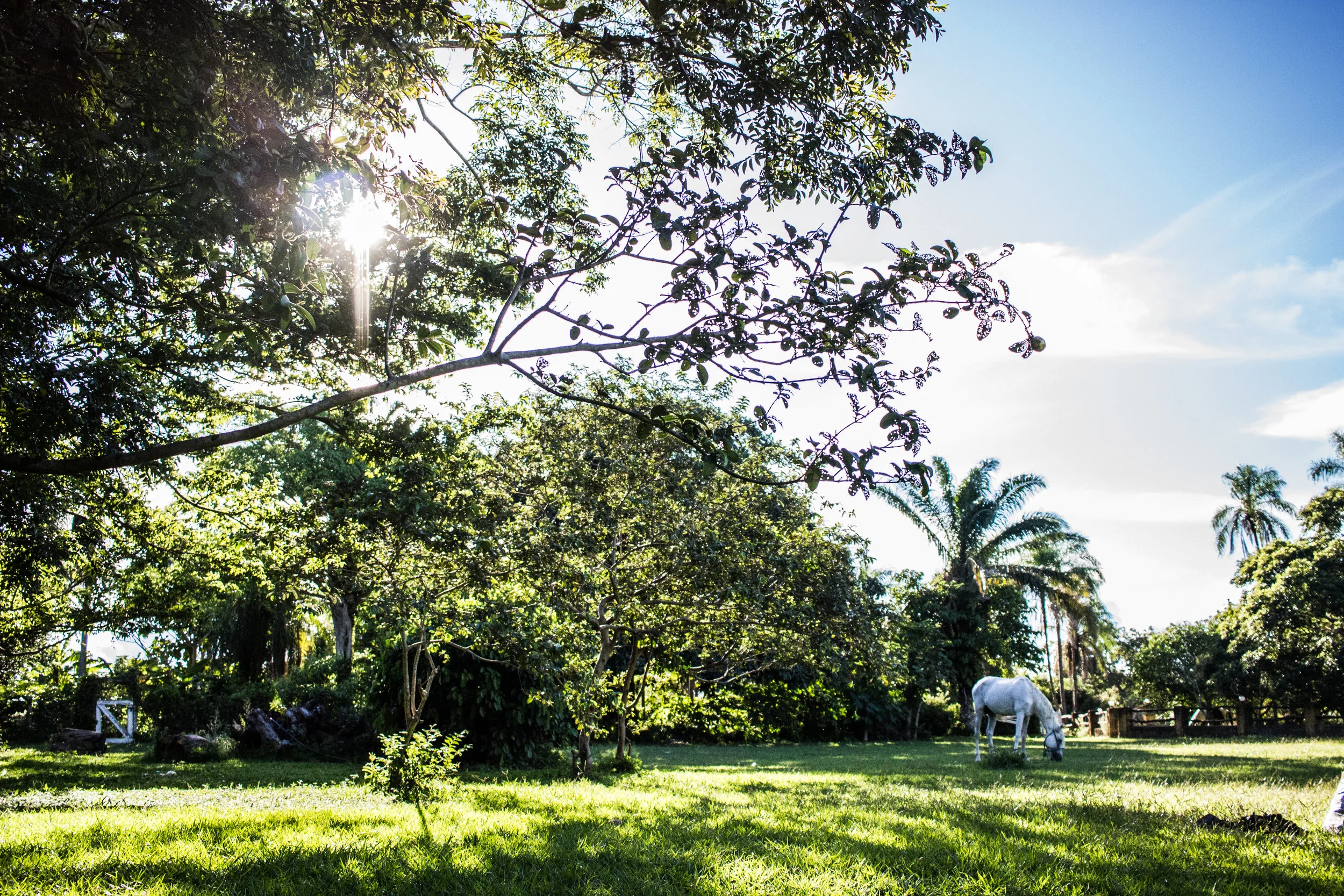
We got ourselves a membership and ended up on this family owned and operated ranch in Santa Cruz, Bolivia called Rancho Montana. The owner, Brent said he needed help “getting his garden ready,” which sounded like an innocent enough request. Gardening couldn’t be that bad right?
Wrong.
It only took about three hours for us to realize that WOOFing in Bolivia ‘aint for weenies.
The ranch itself was absolutely beautiful, but upon being shown the “garden” I was overcome with a desperate urge to take off running as fast and far as I could in the other direction. Fifteen hundred square feet of overgrown misery sprawled out in front of us - teeming with vicious red ants, snakes, tarantulas, mosquitos and giant prickly weeds that could damn near eat you alive. The plot had been untouched for the past seven years, and now we were expected to get this little gem of jungle oasis back into tip top shape. Lovely.
Thankfully, the family we stayed with was wonderful. Brent was a kind middle aged ex-pat who wore his hair long, his shirt sleeves cut-off and told stories that could keep you glued to the kitchen table for hours. Patty, his beautiful Bolivian wife, only spoke Spanish, but made killer lunches and often forced us into belly laughter with her hand gestures alone. And their three children - Heather, Brandon and Breanna were sweet, polite - helped us with our Spanish and killed spiders the size of baseballs in our room while we stood in corner, watching in horror.
They put us up in a nice little guest house with our own bathroom, laundry and a few dozen lizards (which I learned to be thankful for because the ate all the bugs). And for the next two weeks we spent 6 hours a day, 5 days a week barbecuing ourselves in a tropical inferno - toiling away in the garden from hell - expelling sweat from our pores faster than we could make it.
There were also other odd jobs, including hauling manure, helping to paint the aforementioned pigpen and corralling its fat slippery tenants from one area to another. The last of which was actually quite entertaining.
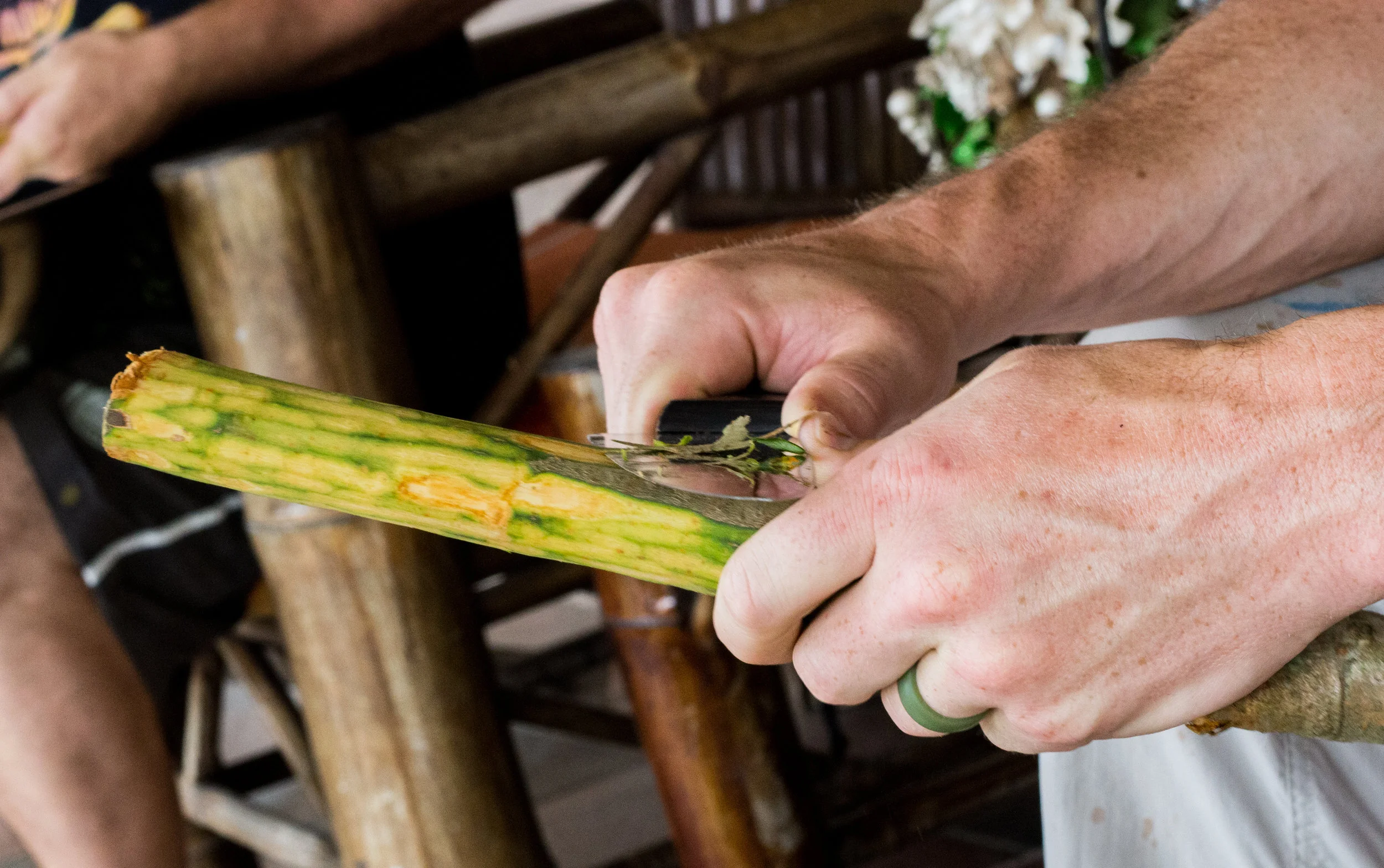
On weekends we got do to the fun stuff (the stuff I had imagined from the beginning) picking cherries and blackberries, peeling the bark off of cinnamon trees, learning how coffee is made and seeing the process through from start to finish.
And all the while, Brent and his family were kind, welcoming and lovely. They invited us for a steak dinner at the restaurant on their property, took us into town to see the Carnival parade, shared their extensive music collection and were all around fantastic hosts. So I suppose I can’t whine about it all too much.
And I’ll tell you - that while it certainly wasn’t a picnic - that I detested picking thorns out of my fingers and tallying the swollen bites on my wrists - that watching the brown water ooze down the shower drain saturated with the dirt I had collected from a days work totally gave me the willies - I don’t think I have never been so proud of a 30x40 plot of land in my life. When we had finished I couldn’t stop staring at it. What a beautiful pile of dirt. Did you see those hedges?? That perfectly groomed layer of “organic material”?? Not a damn weed in there. Perfection.
And it was totally cool to eat a cherry pie made with cherries you had picked, to smell the cinnamon buns baking with cinnamon you had cut. I can’t tell you how much better a cappuccino tastes when you collected the coffee, shelled the beans and roasted them yourself.
So while it wasn’t always the most enjoyable, and certainly not the most relaxing 14 days we’ve spent this year - it was definitely worth while. It made me want a garden of my own someday - although I’m pretty sure I could do without the pigs - and the memory of Brad jumping ten feet in the air and shrieking like a little girl while a tarantula dashed between his legs will make me chuckle for years to come…
Until next time.
-Kenz




DAYS 155 - 160: POTOSI - BOLIVIA (PART TWO)
“Amigo, hold this.”
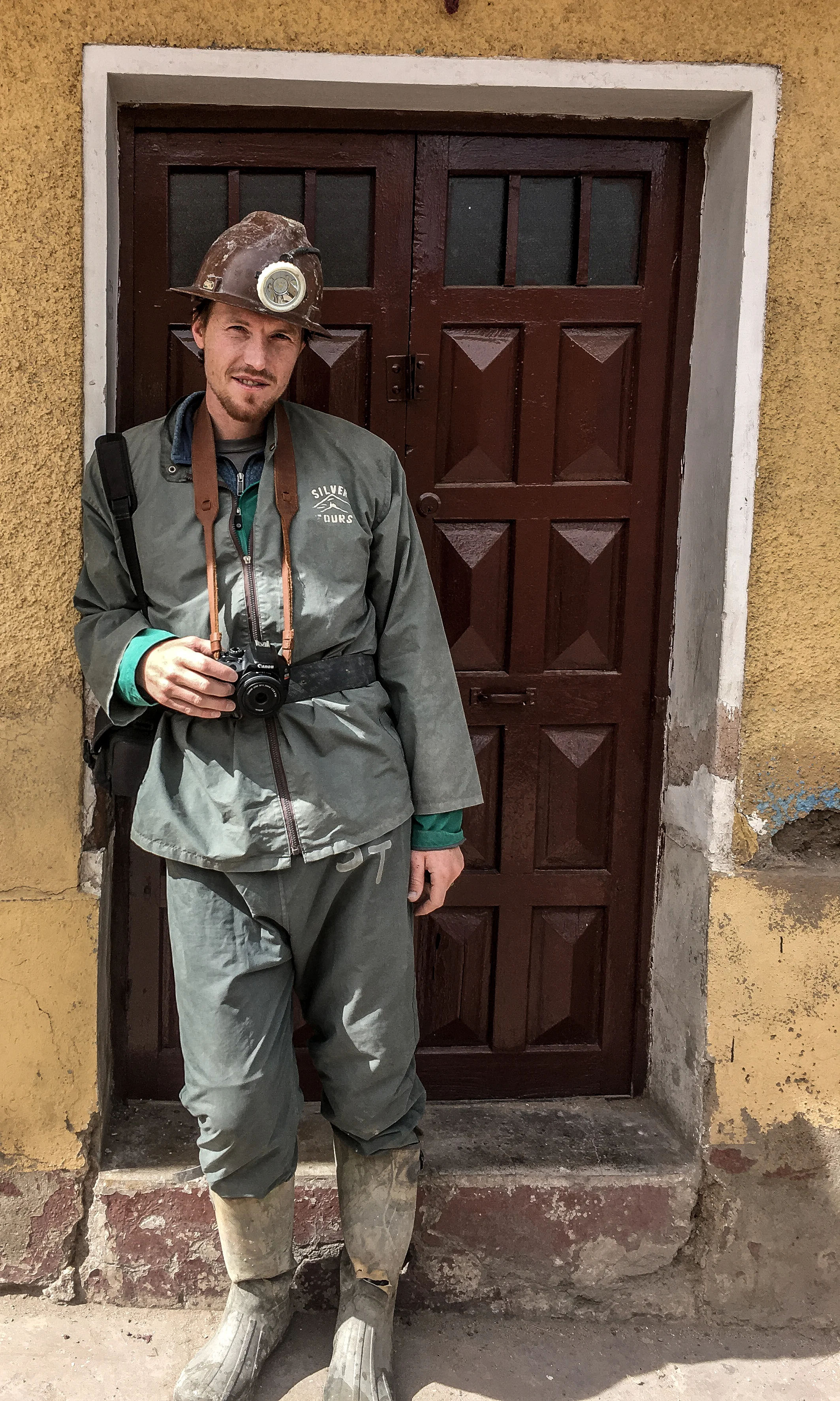
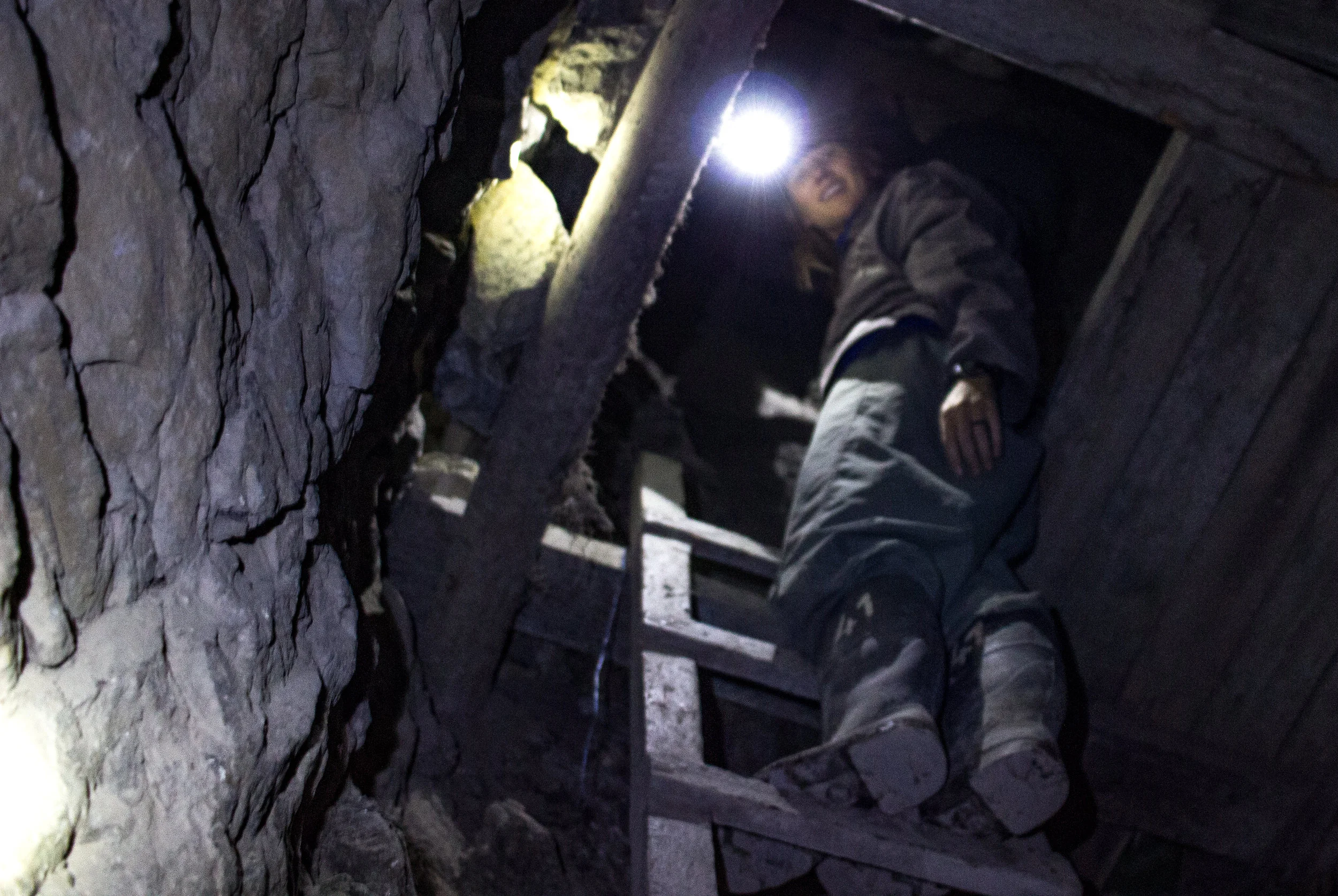
Immediately, I regretted stretching out my hand as our tour guide placed a charged stick of dynamite into my palm. The rest of the group backed away in disbelief. McKenzie stayed by my side long enough to take a picture before retreating herself. After lighting a “3-minute” fuse and jamming the stick into a hole in the wall, I hurried towards the others up the narrow mineshaft - our guide calmly taking his time behind me. About two and half minutes later a burst of the wind from the explosion echoed by us. This was not your typical mine tour.
P O T O S I , B O L I V I A
“Amigo, hold this.”
Immediately, I regretted stretching out my hand as our tour guide placed a charged stick of dynamite into my palm. The rest of the group backed away in disbelief. McKenzie stayed by my side long enough to take a picture before retreating herself. After lighting a “3-minute” fuse and jamming the stick into a hole in the wall, I hurried towards the others up the narrow mineshaft - our guide calmly taking his time behind me. About two and half minutes later a burst of the wind from the explosion echoed by us. This was not your typical mine tour.
Potosi, Bolivia is a charming town with a not so charming reality. At 13,500 feet in elevation, it is also one of the highest cities on earth. Over the past week, we had travelled over 2,000 miles north by bus, boat, air, and Jeep. We needed a break from the road, time to update our family with our whereabouts, and we were well overdue for a date with the laundromat. So we decided to stick around for a few days and spend some time exploring.
The town is built on Cerro Rico Mountain, which has a rich mining history dating back to the Spanish Empire in the 15th and 16th centuries. Most of the silver that it was originally known for has been all but gutted - but the mining for other minerals, such as Zinc, continues to this day in a very outdated and uncontrolled environment. The mountain is literally crumbling in on itself from overuse.
It is reported that an estimated 8 MILLION lives have been lost over the years in the bellies of the shafts, giving it the nickname “Man eating mountain.” However, with few better employment alternatives in the area, an estimated 15,000 miners, including children, still trudge into these conditions daily. The average lifespan of a miner in Potosi is 40. Miners that survive 25 years of horrible working conditions often die of a lung disease called silicosis from the inhalation of years of dust. It’s a struggle of a life with a very bleak outlook. A human labor disaster.
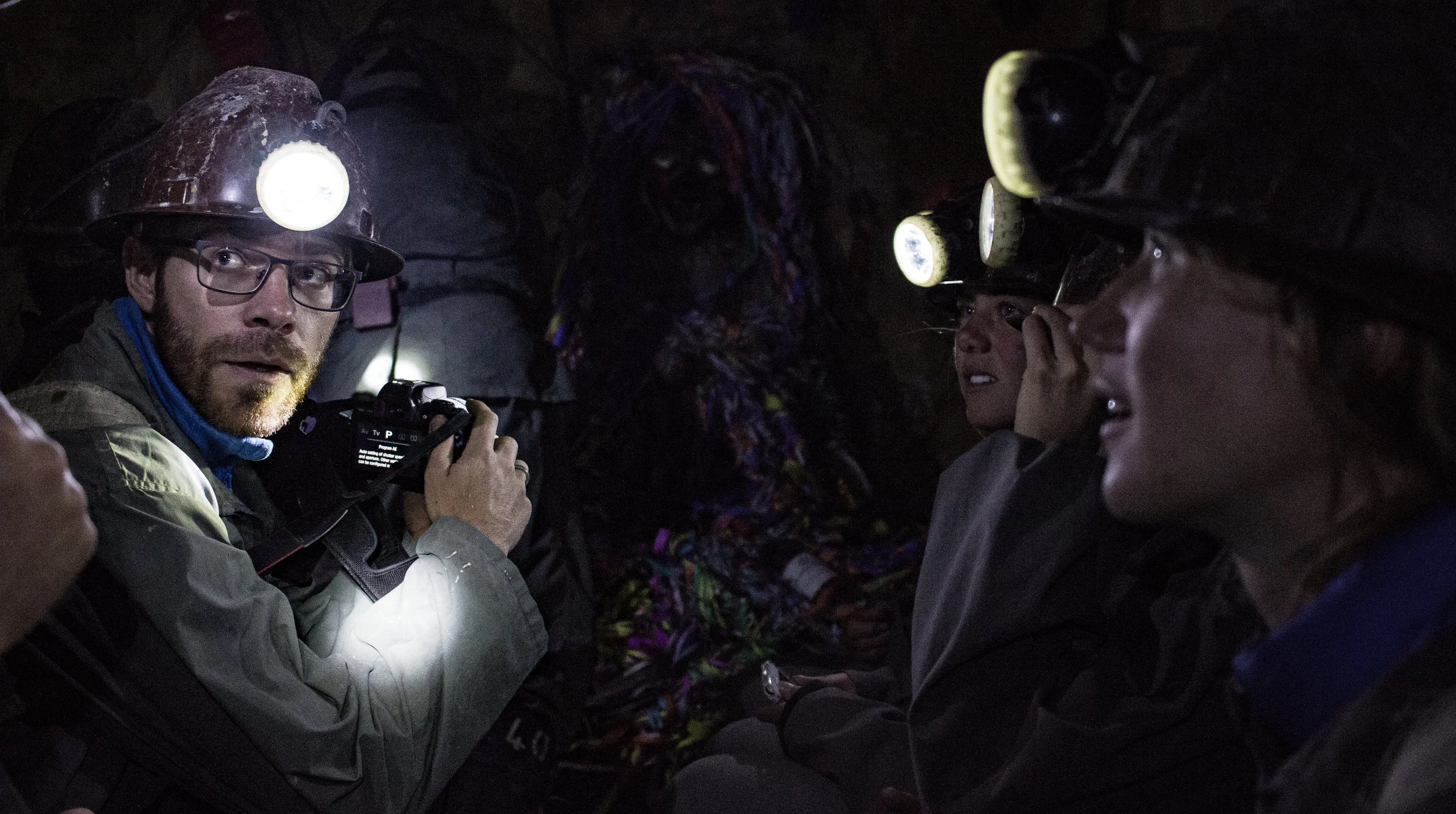
We started the tour by chewing coca leaves, drinking alcohol and pouring out an “offering” to “El Tio”, the devil god, to ask for safe passage through the active mine. These are rituals that all miners adhere to before entering. We then entered the main artery, a shaft about wide enough for a single shopping cart and so short enough that we had to crouch while walking. The light behind us disappeared after a couple hundred yards. There was barely any oxygen outside the mines at this altitude, but inside, there was far less. Walking was laborious, slow and unnerving.
We passed by, what seemed like hundreds of other tunnels - branching out from the main mineshaft. There were no signs or road crossings. These were even narrower and darker than the one we were in. It felt as if you were suffocating within a closed refrigerator one moment then locked in the backseat of car on a smoldering hot summer day with the windows up the next. All the while, you couldn’t help but think you were touring through one of the world’s largest graveyards.
The deeper we ventured into the mine, the more the tour group members fought to stay up front close to the guide, fearing a wrong turn would leave you left behind and lost in the maze of underground tunnels.
The scariest part was descending series of rickety ladders. All were dead vertical, many missing valuable rungs, and had protruding rusty nails that caught loose clothing. The ladders looked like they could barely hold one person let along a tour group. Kenzie and I gave each other a look of, “What the hell did we get ourselves into this time?” When we rock climb, we can see the ground. Here, the glimmer of our headlights dropped into a black abyss.
We passed a group of miners working, each of their faces stained with dirt and sweat. We gave them gifts that we bought at the miners village and in return they answered a few of our group's questions as they drank our juice and refilled their coca leaf bolos.
Thankfully, just as we both thought we couldn’t bear the claustrophobia any longer, our guide turned us around and started leading us through darkness, back up the ladders and towards the opening of the mine. Our eyes squinted tight as they desperately tried to adjust to the incoming light.
Back in town, we were quickly brought from our sobering encounter as Potosi started its preparations for Carnival, a multi-week celebration here similar to Mardi Gras. We we sprayed by foam by playful kids and sipped coffee as parades and music started to engulf the city. We enjoyed this side of the Potosi story much better. And were feeling a little extra blessed that our biggest worry that week was trying to find the next laundromat.
-Brad



DAYS 152 - 154: SAN PEDRO TO UYUNI - BOLIVIA (PART ONE)
McKenzie and I both took a pinch of coca leaves from a plastic bag handed back from our driver, Orlando, and stuffed them into the sides of our cheeks. The leaves, Orlando explained, helped prevent altitude sickness - (they’re also the same ones used to make cocaine). In a matter of one day we had gone from sea level to 16,500 feet. And after watching another guest get carried back to the Jeep and in rough shape, a hard sell wasn’t needed. It wasn’t as if we would be drug tested anytime soon.
S A L A R D E U Y U N I , B O L I V I A
McKenzie and I both took a pinch of coca leaves from a plastic bag handed back from our driver, Orlando, and stuffed them into the sides of our cheeks. The leaves, Orlando explained, helped prevent altitude sickness - (they’re also the same ones used to make cocaine). In a matter of one day we had gone from sea level to 16,500 feet. And after watching another guest get carried back to the Jeep and in rough shape, a hard sell wasn’t needed. It wasn’t as if we would be drug tested anytime soon.
We had crossed into Bolivia earlier that morning from a small outpost in northern Chile - just outside the city of San Pedro De Atacama. After being hassled for a bit at the Bolivian border, we had piled into a burly Toyota Land Cruiser and met Orlando, a stocky grizzled Bolivian that spoke only Spanish and who would be charting our course through the sea of high elevation gravel that stretched for miles in front of us.
Over the next three days, Orlando drove us, and two other couples, over 400 miles to Uyuni, Bolivia. We traveled on beaten down jeep paths, barely distinguishable from the open terrain - always ending up in some tiny village in the middle of nowhere. Hidden in between those villages however, were magnificent natural wonders and some of the most remote and amazing country we’ve ever experienced.
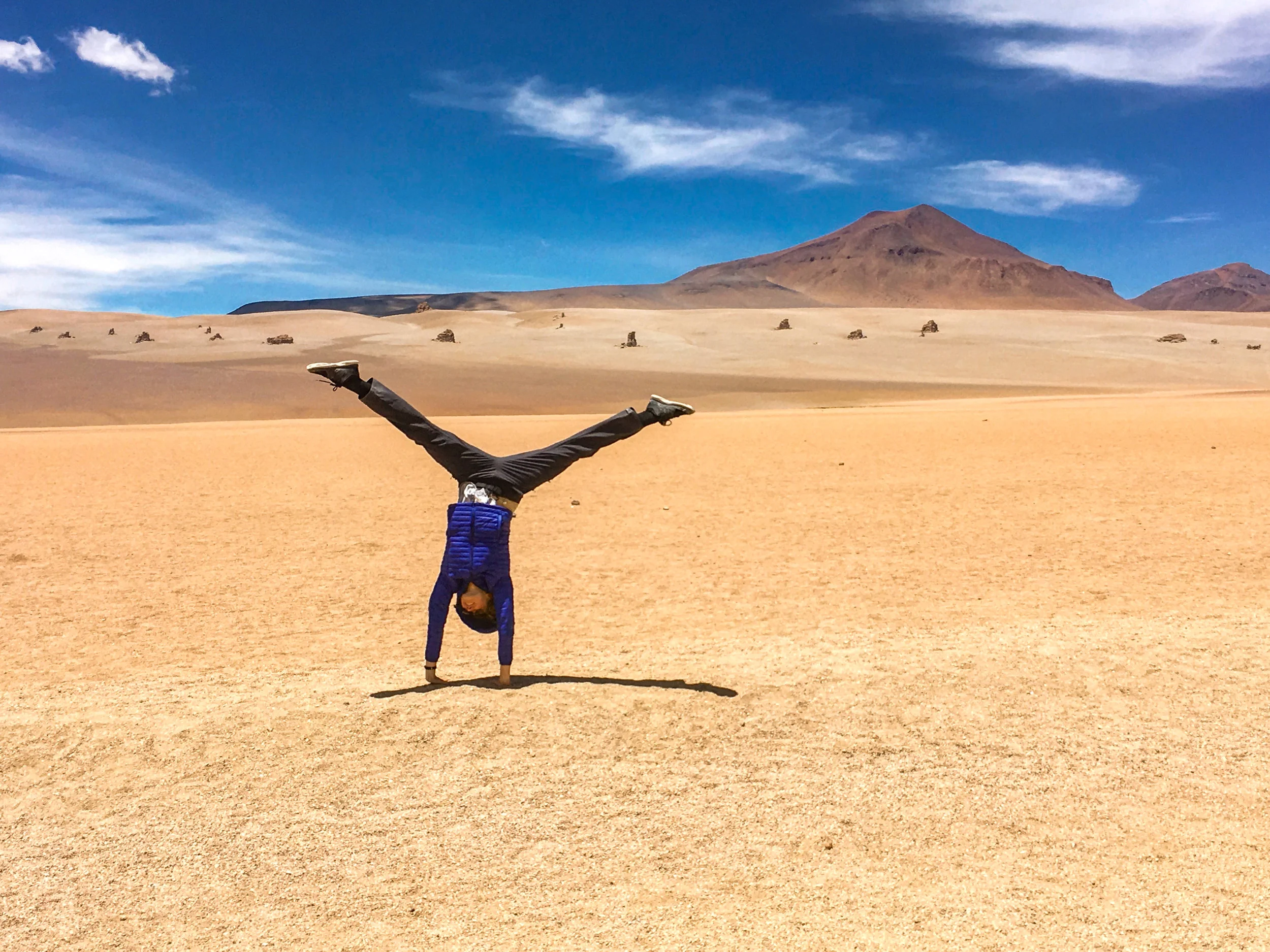
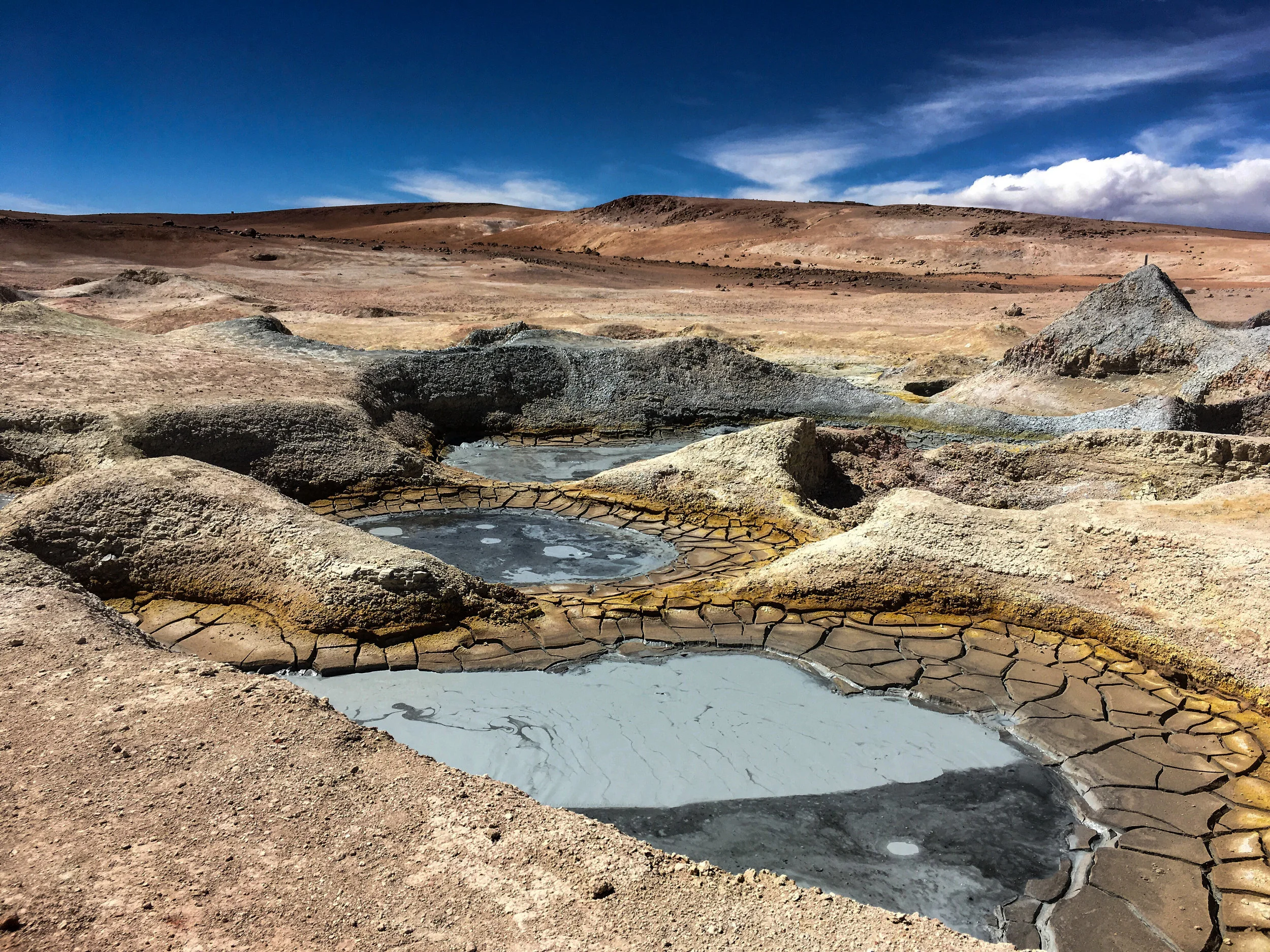
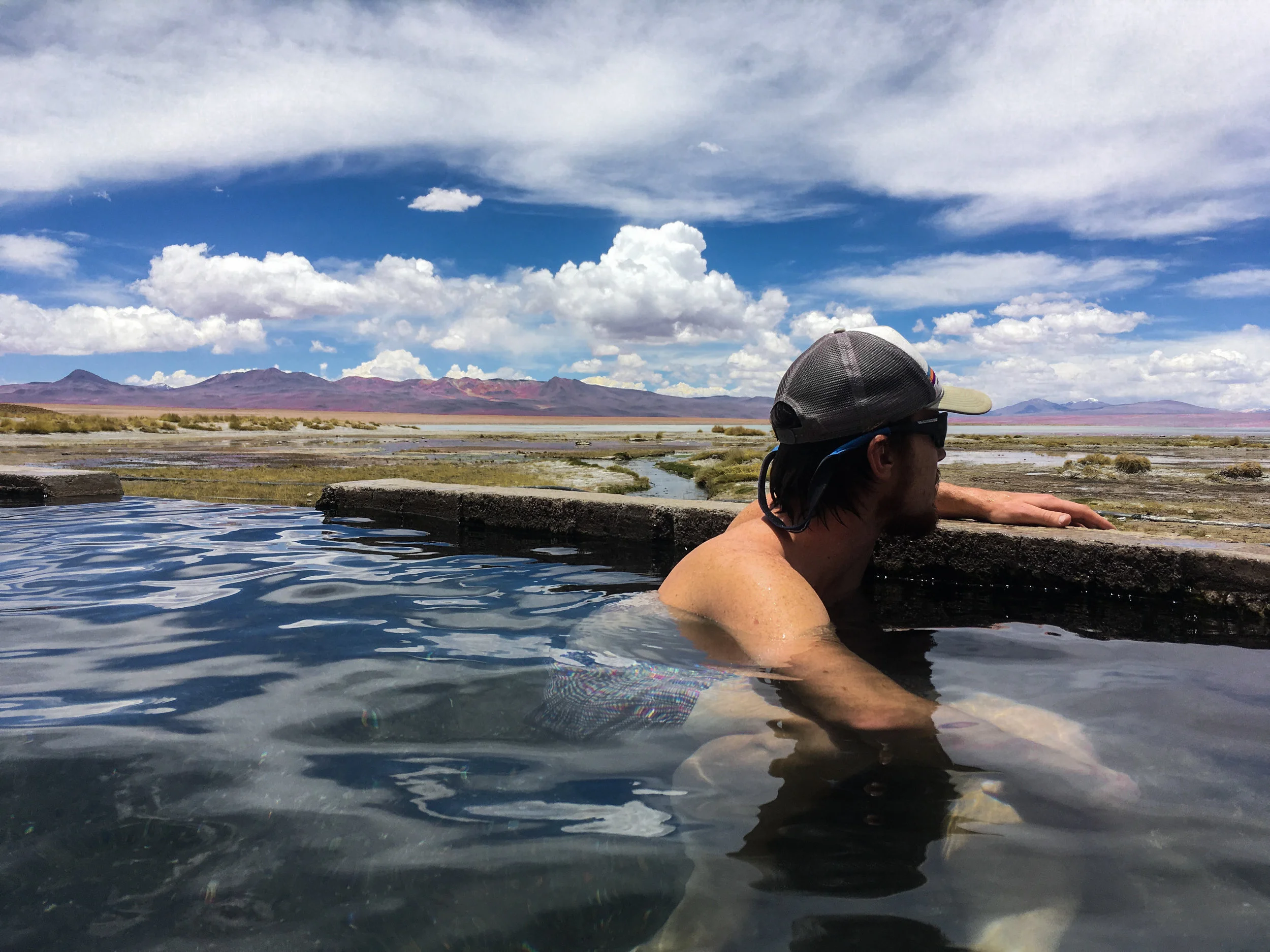
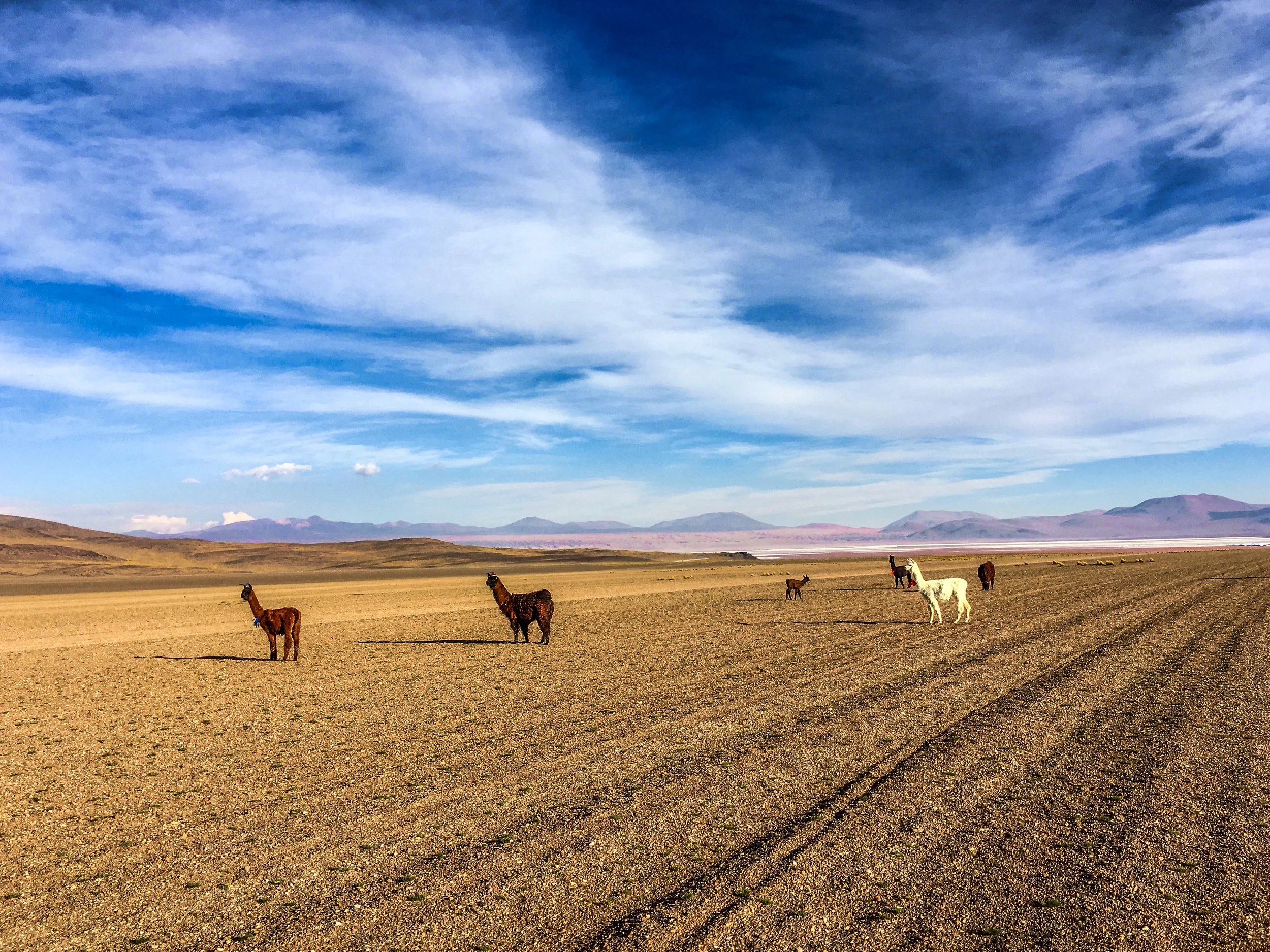
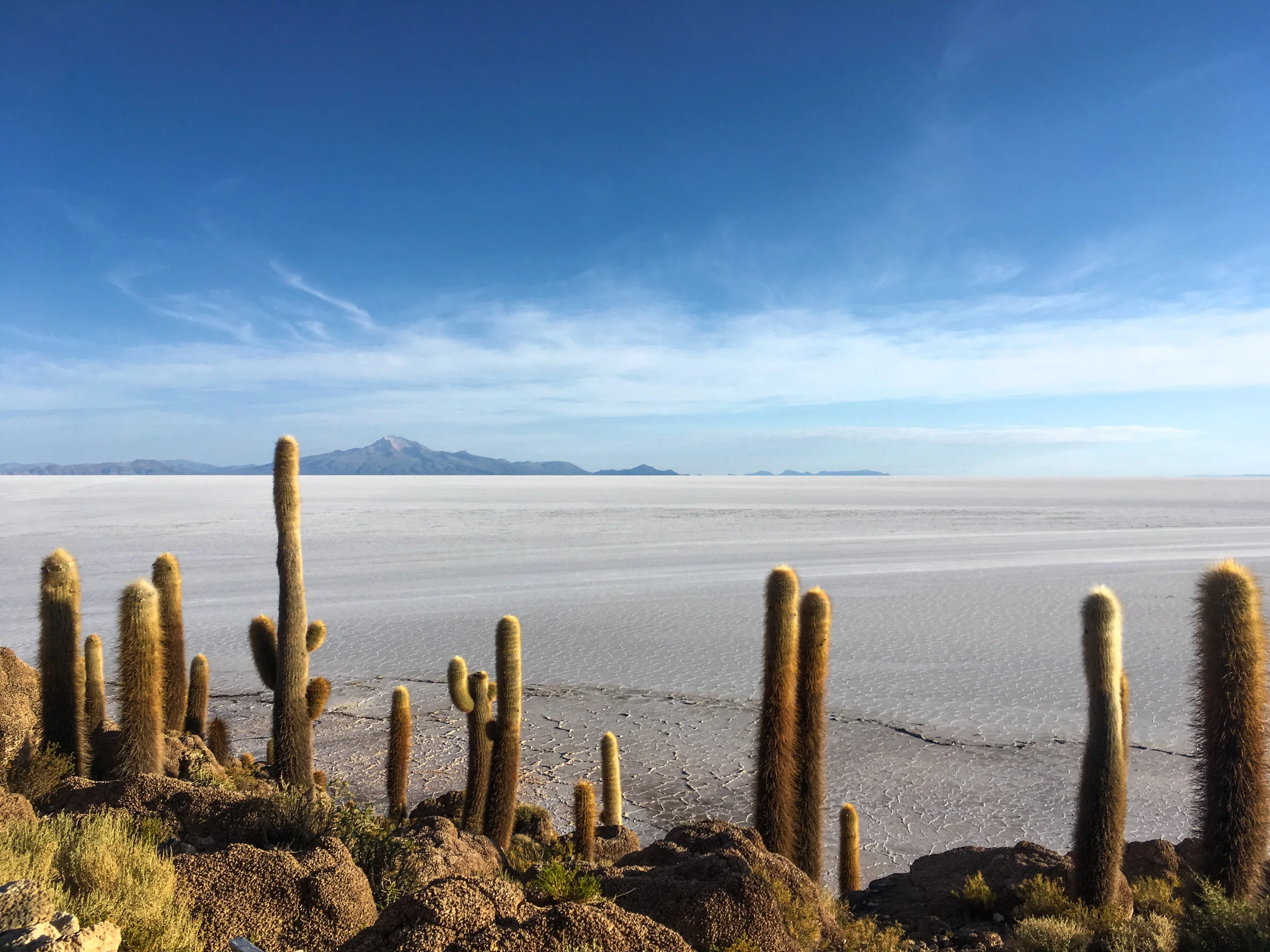
We passed reflections of perfectly snow capped volcanos in emerald lakes. We drove through the high alpine desert that inspired Salvador Dali. We dangled our legs off the rim of Bolivia’s grand canyon. Hiked through slot canyons to hidden lagoons. Peered over bubbling geysers. Stopped to chase grazing llamas and took pictures of flamingos feeding in red lakes. We ate lunches prepared by tiny Bolivian women in their dirt and brick walled homes, soaked in hot springs, and sipped cactus beers in a deserted rail yard town. Everyday was action-packed. The next sight better than the last. It felt like speed dating Bolivia’s most scenic attractions.
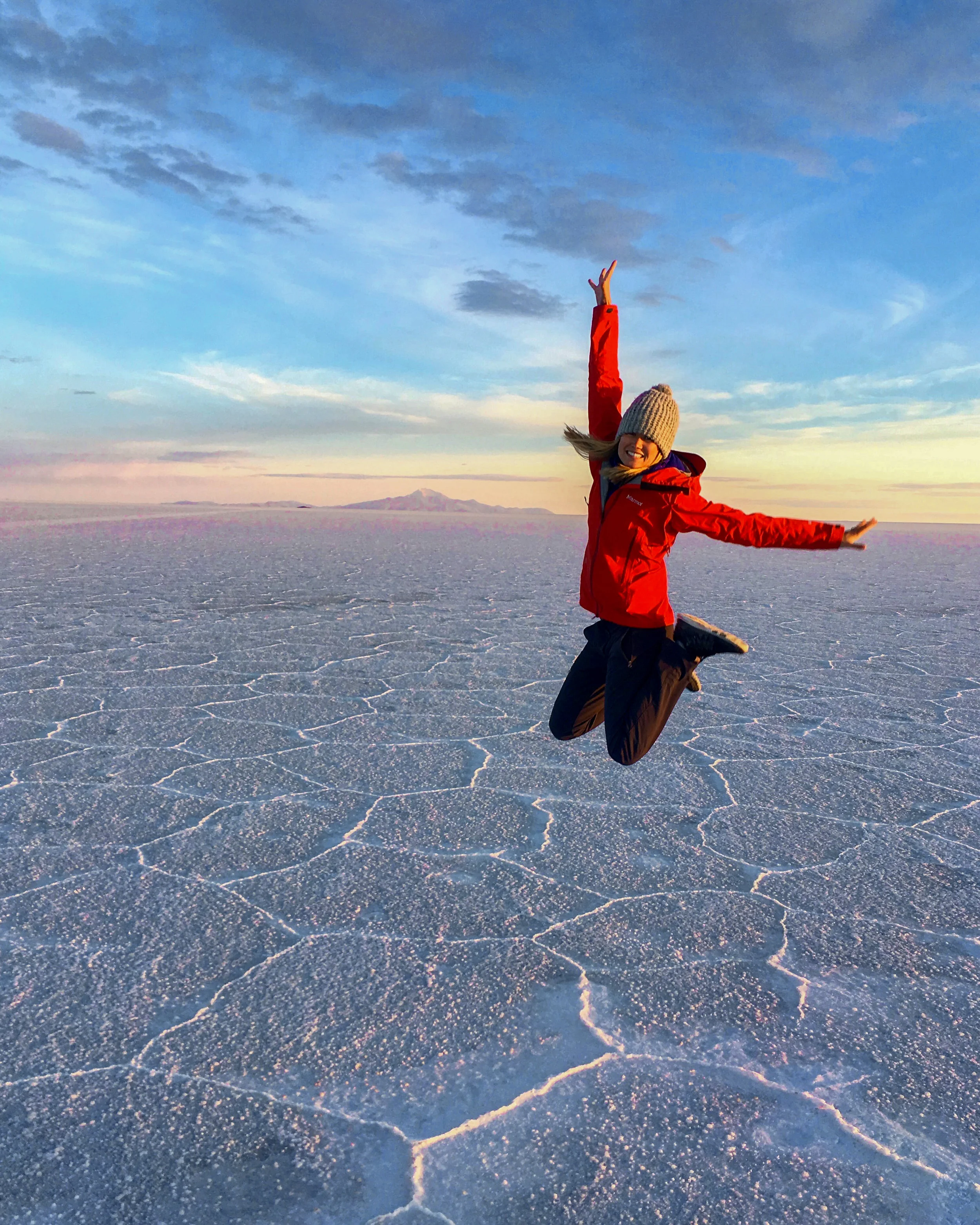
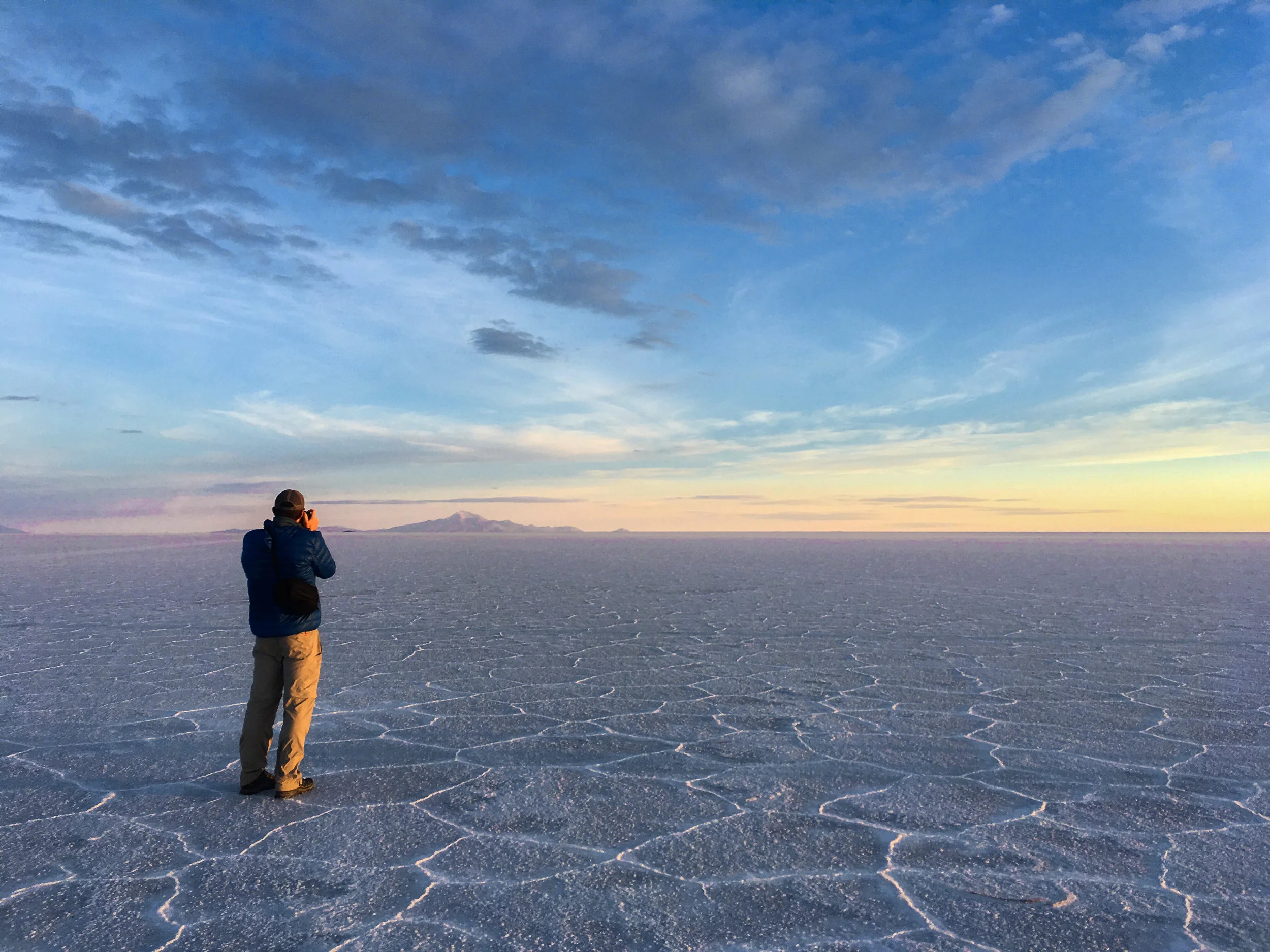
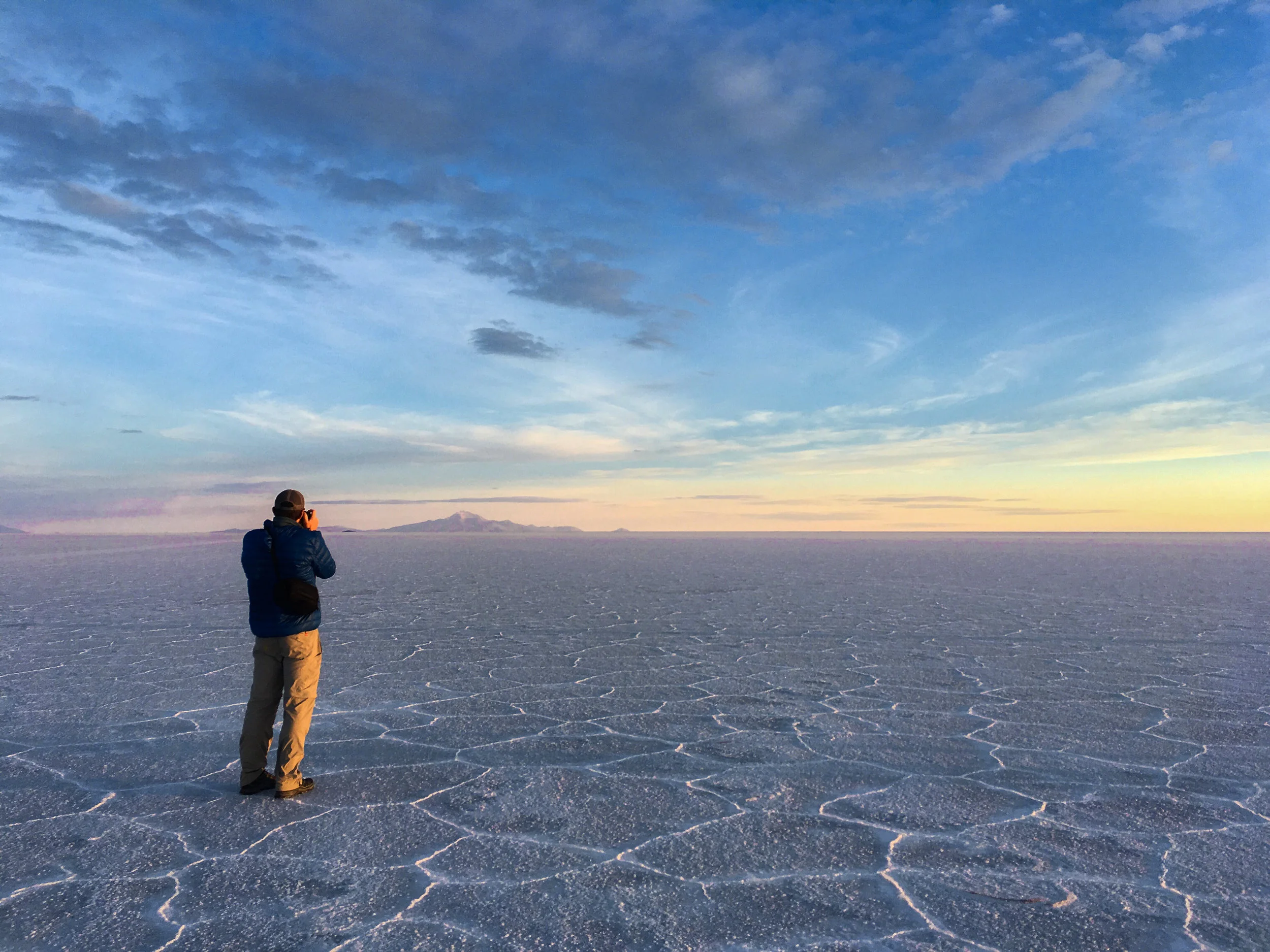
The highlight of the tour came on our third day when we woke up at 4am to watch the sun rise over the world’s largest salt flat, Salar De Unuyi. At over 4,000 square miles, the crystalized surface of the long since evaporated lake seemed to stretch forever. We watched in awe as the stark white sea in front of us cracked and glittered, illuminating itself in the morning glow. It was an environment more moon than earth - truly unlike anything we’ve ever seen.
Our tour finished in Uyuni. We said good bye to Orlando and our new friends and caught a local bus to Potosi. We didn’t know what to expect traveling into Bolivia, but it had definitely amazed us so far. And we were pretty excited to see what else it had in store.
-Brad